Jul 4 – Oct 18, 2026
Mediterraneo — International Ceramic Competition
Shota MiyashitaCastello Episcopio, Grottaglie, Italy
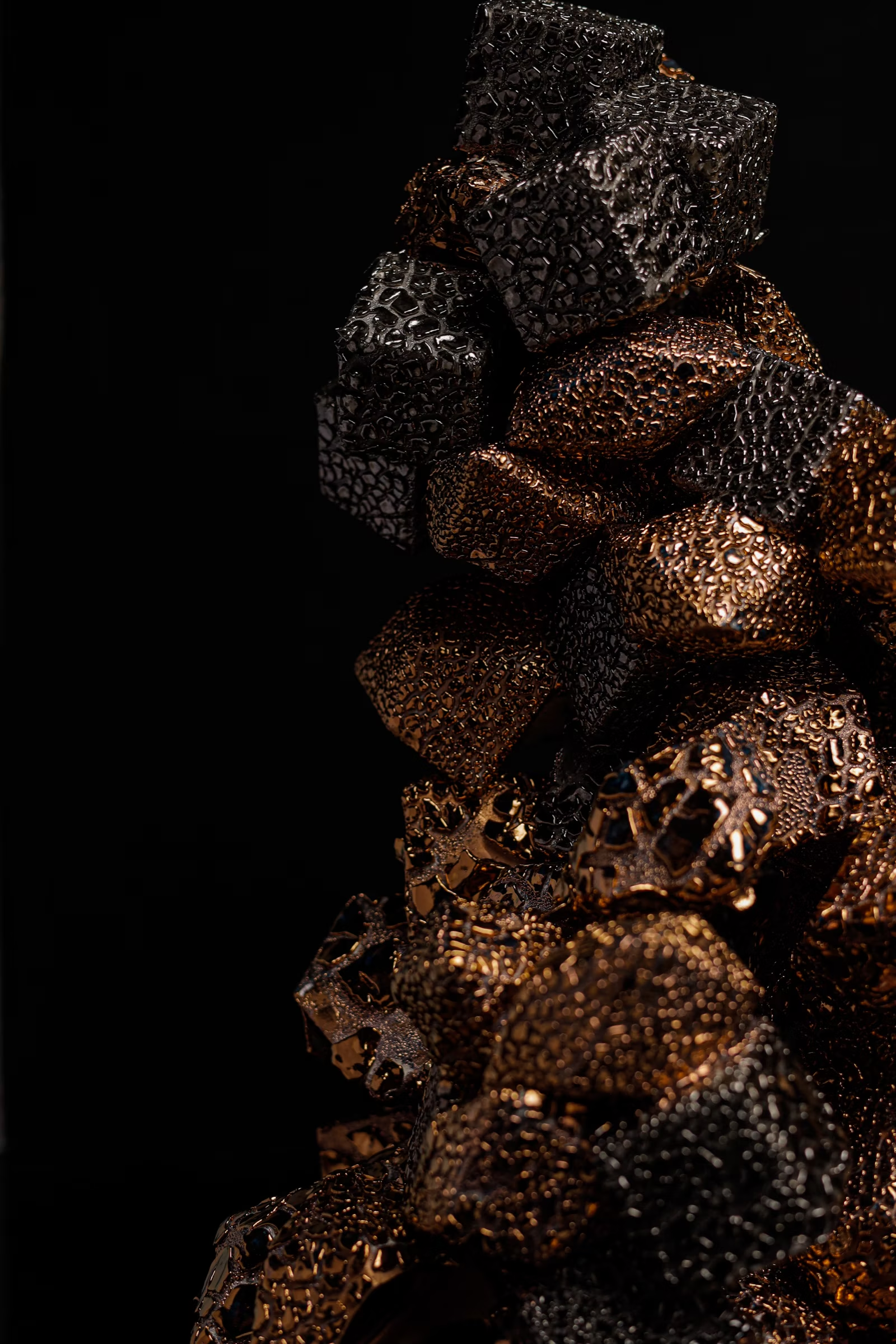
Selected work “Fractal” on display
Grottaglie, IT
No. 001 — INDEX
Exploring new ways ceramics can be made
01 / 08
FIELD
Ceramic / Glaze
BASE
Mino, JP
SINCE
2017
§ 03 / Profile
Ceramic artist

§ 04 / Abstract
Beginning his career with self-organized "street exhibitions" — showing his work on nothing more than a single furoshiki cloth — Shota Miyashita has built a practice that moves freely across conventional boundaries.
A contemporary ceramic artist, Miyashita places "formulation" at the heart of his practice — approaching not only materials but people, disciplines, and industries as elements to be measured, combined, and composed. Through team-based production and collaborations across art, design, architecture, and manufacturing, he continually explores new possibilities for ceramics.
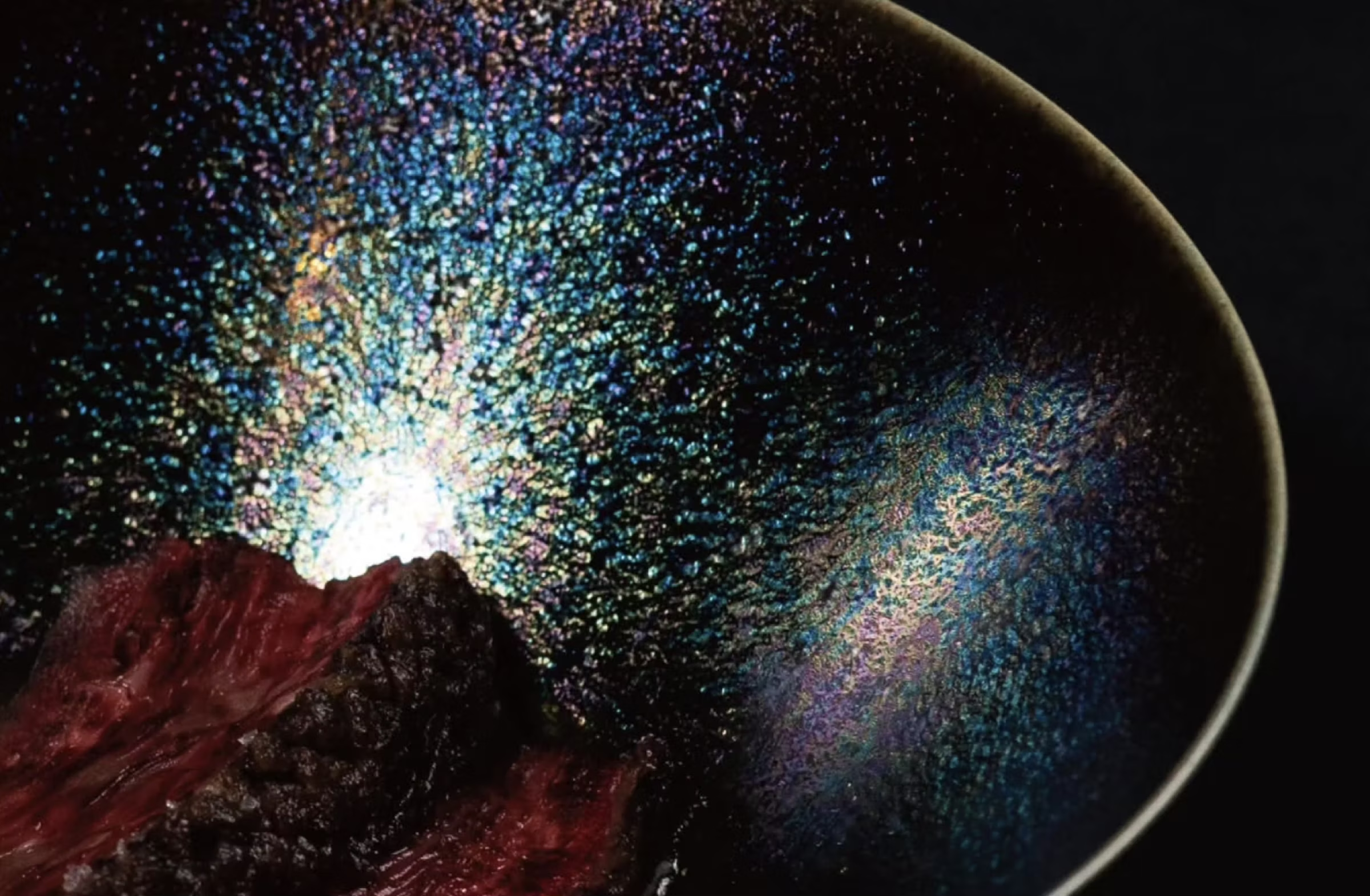
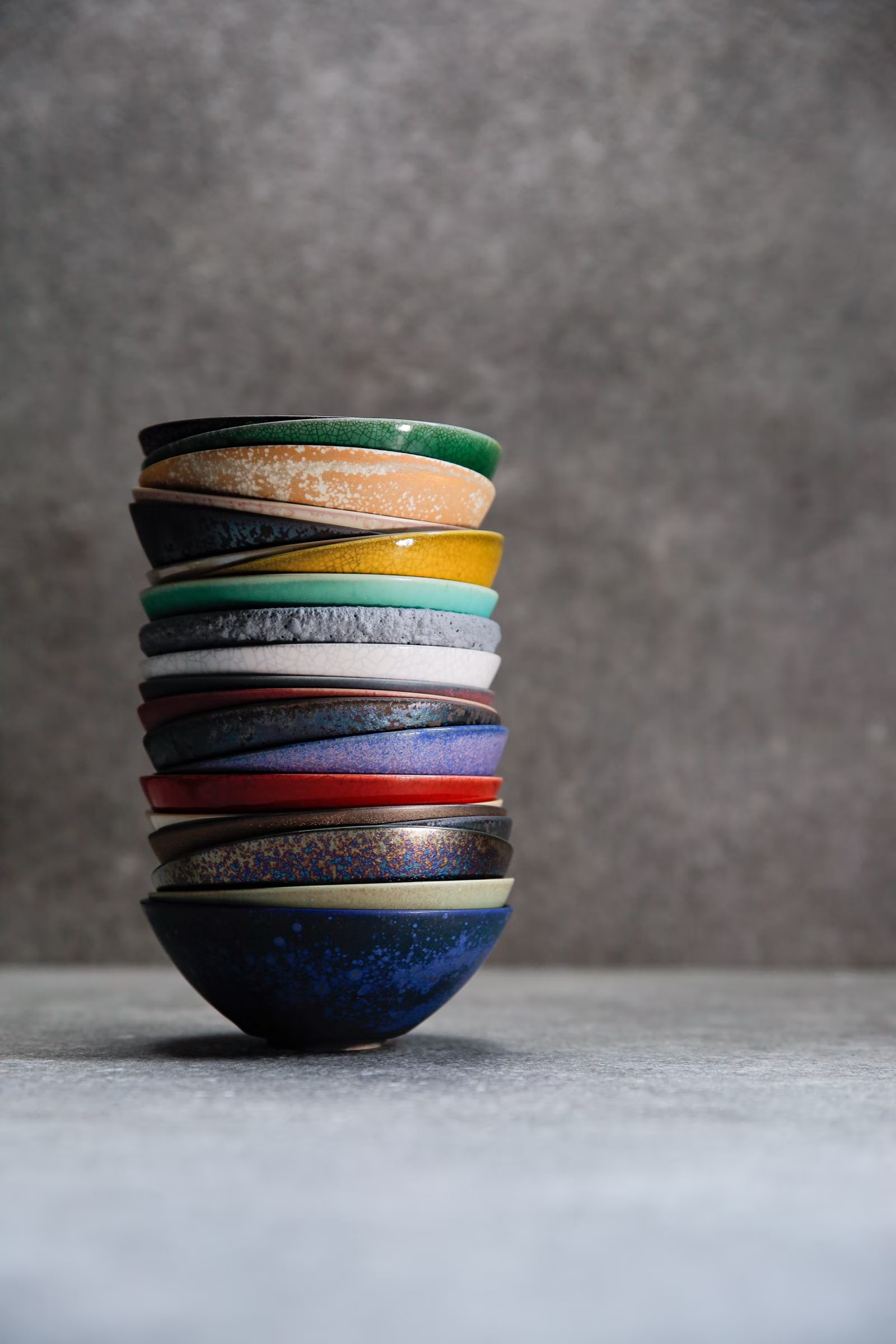
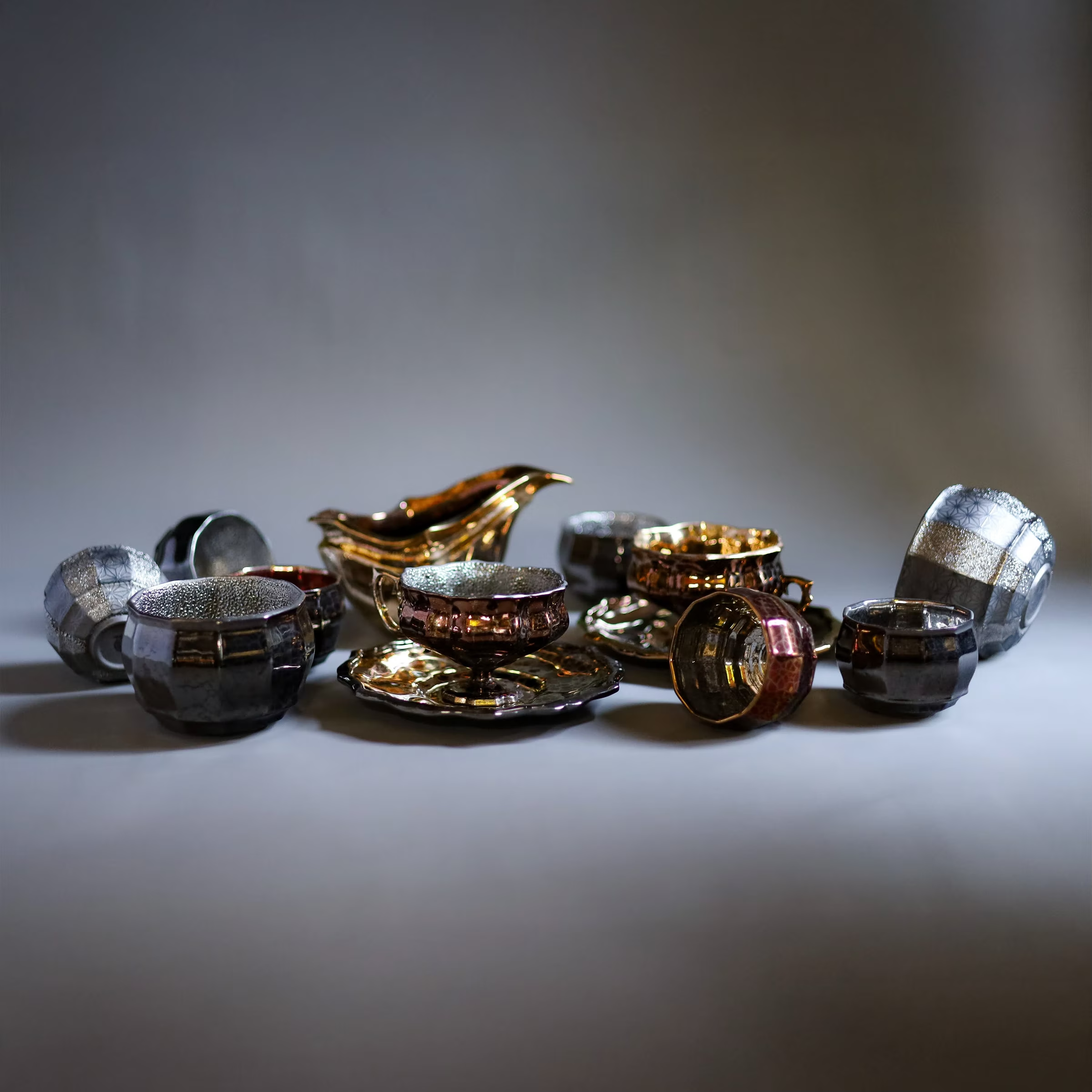
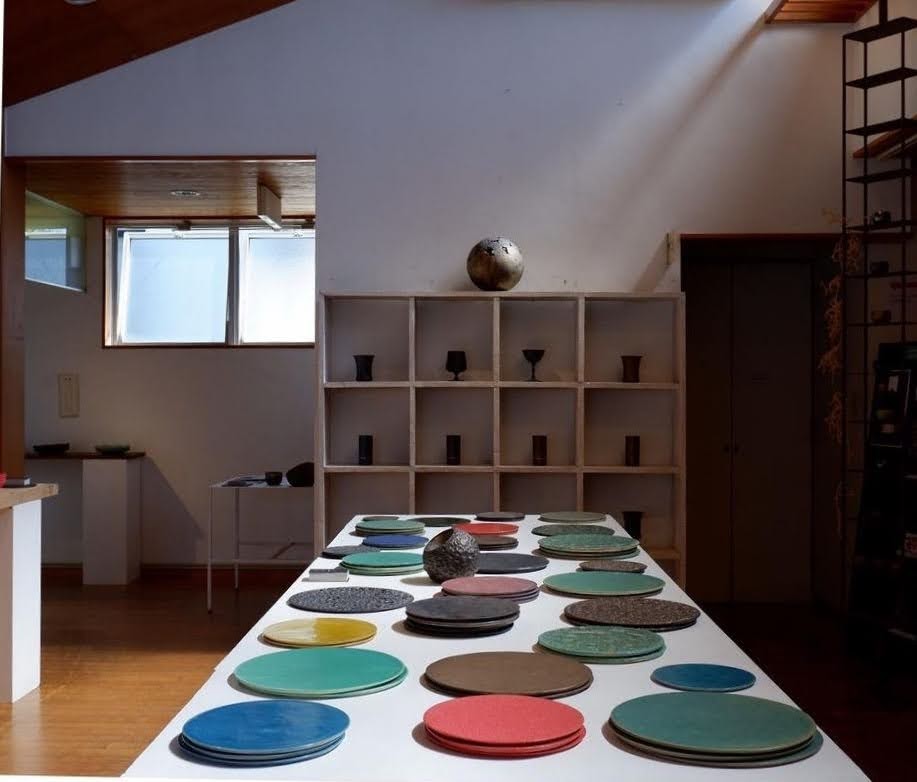
Based in the Mino ware region of eastern Gifu, Japan, he has developed original glazes — crystalline glazes in particular — through years of research. Formulating glazes from raw materials sourced around the world to a precision of 0.001 grams, and controlling firing temperatures in 1°C increments, he creates surfaces where scientific precision meets the unpredictability of the kiln.
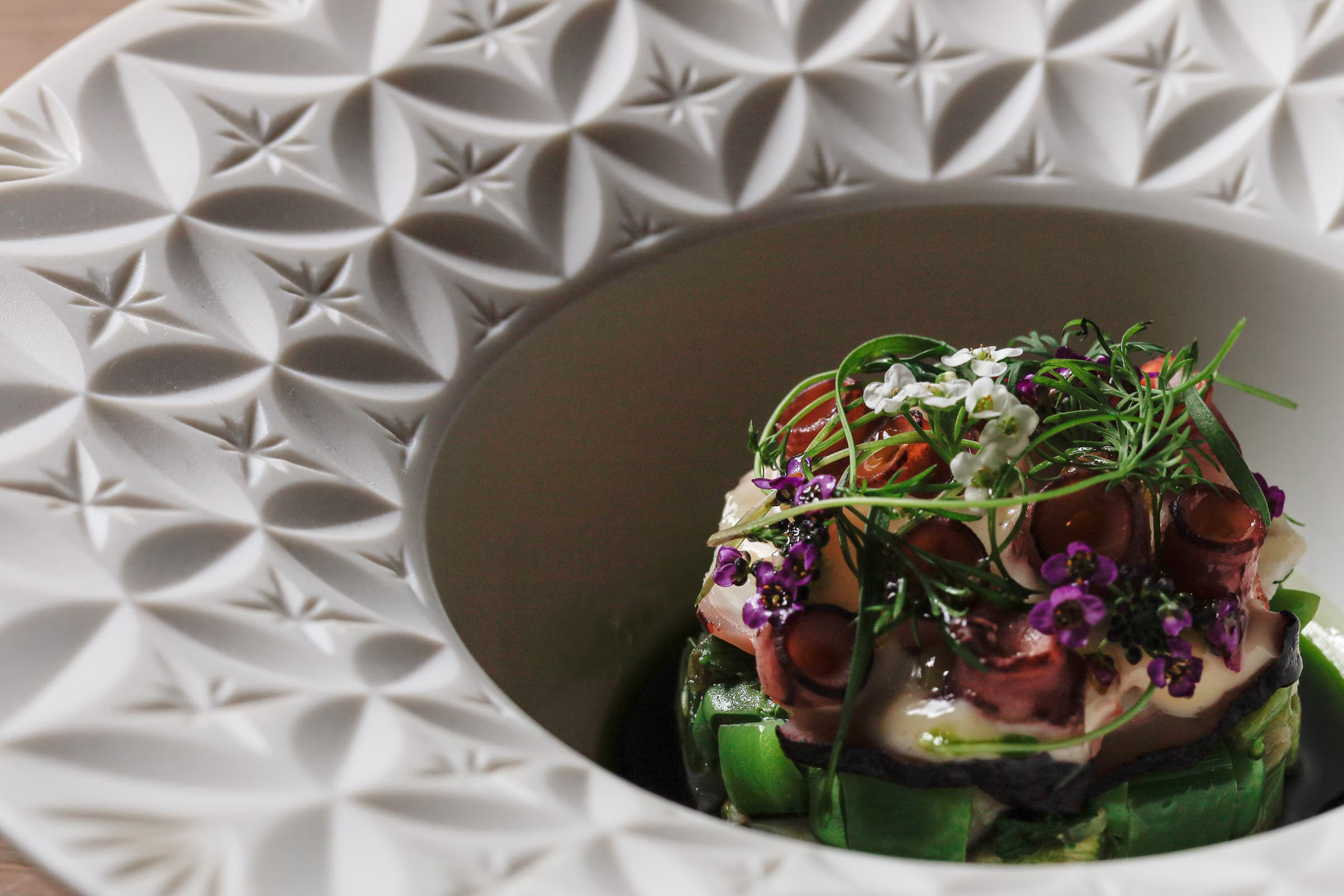
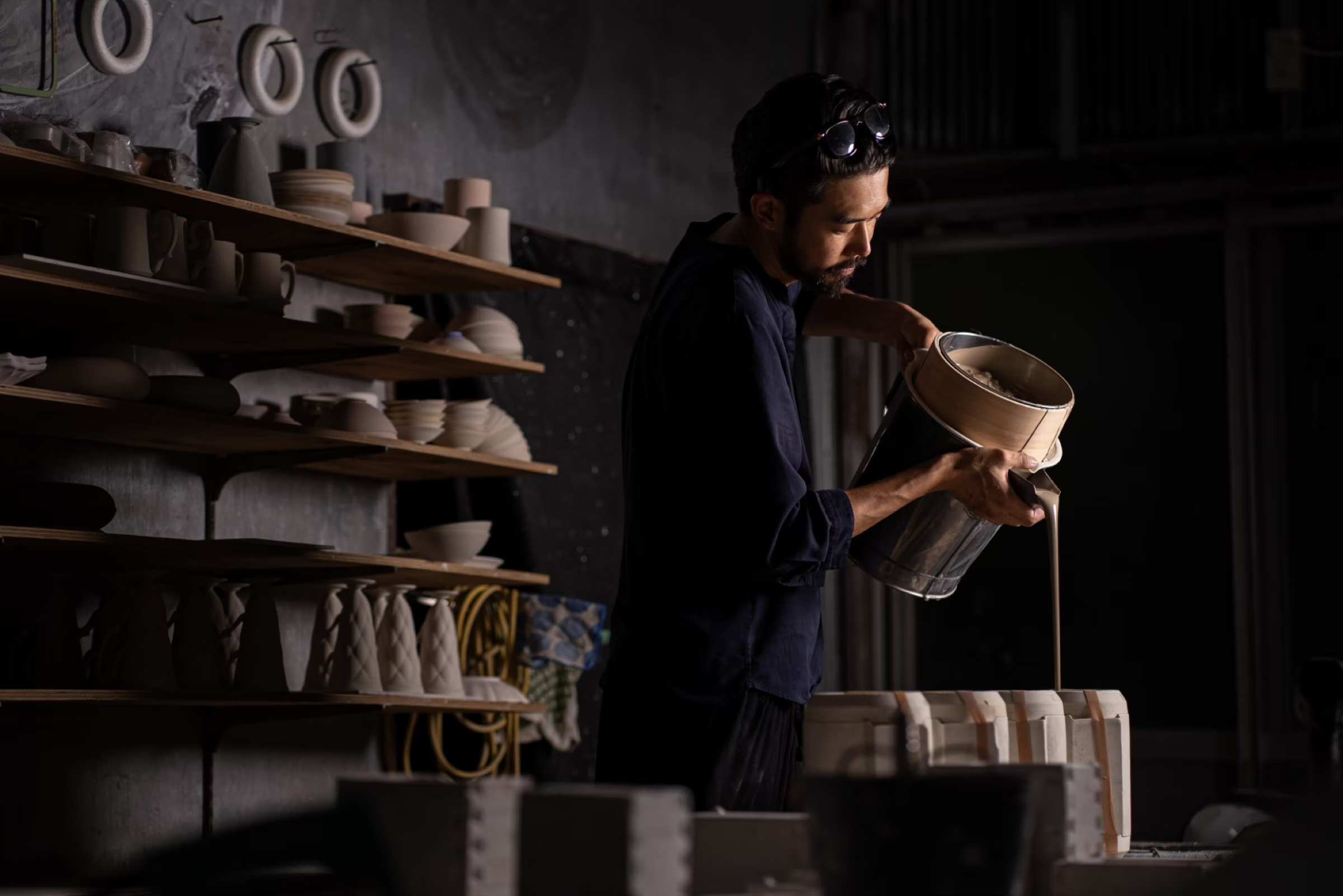
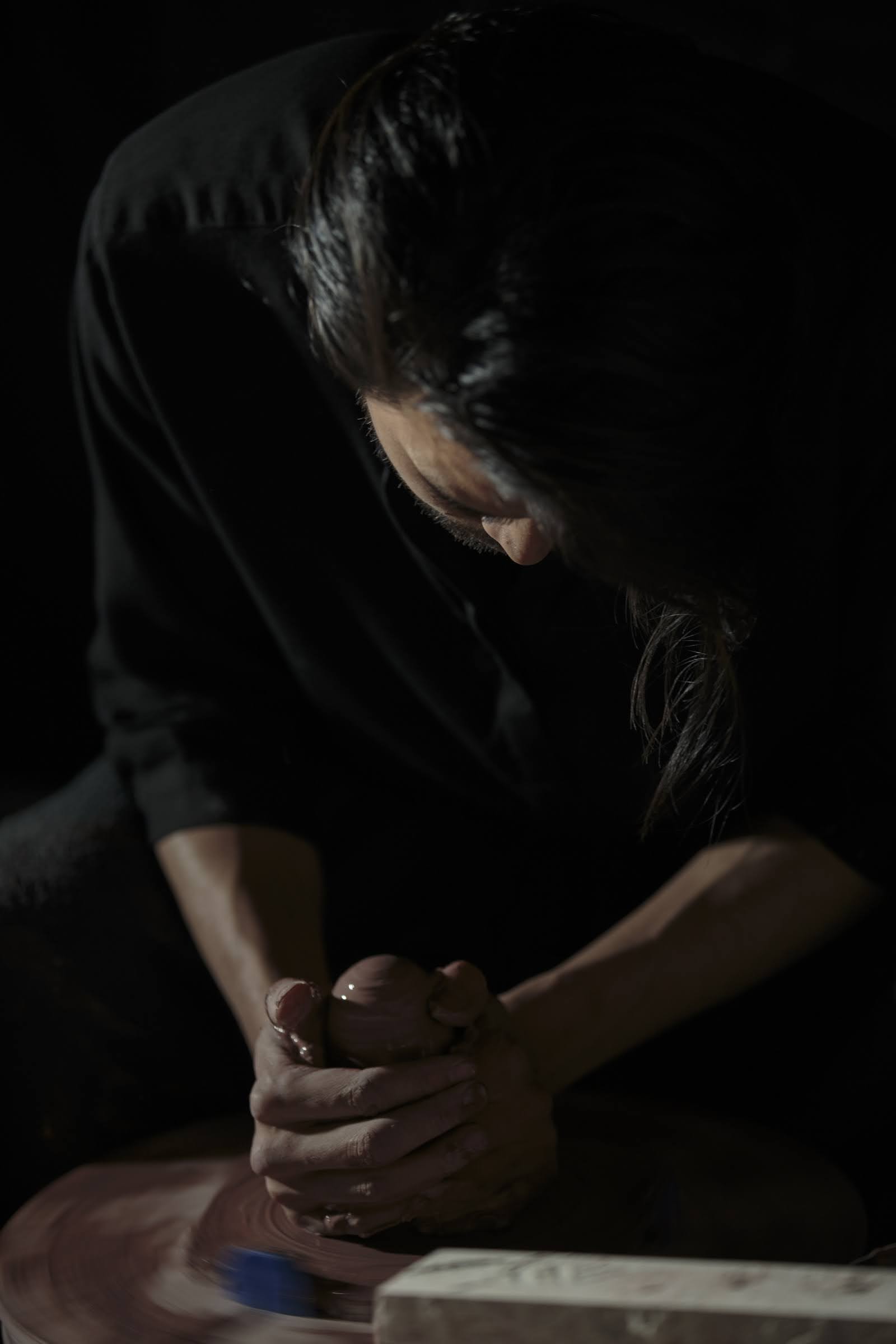
Rooted in the traditions of Japanese ceramics while embracing contemporary technology, he moves between digital modeling, 3D-printed master models, and a range of forming methods — slip casting, pressure casting, and roller forming — each chosen to suit the work at hand. Moving fluidly between one-of-a-kind artworks and scalable product design, he works across the conventional divide between artistic expression and industrial production.
Today his work reaches beyond the studio into cross-disciplinary collaborations, product development, OEM manufacturing, architecture, and spatial direction. Connecting traditional craftsmanship with contemporary systems of production and design, he is gaining international recognition for exploring new ways that ceramics can be made.


§ 05 / History
No. 01
From a young age, I struggled with the fact that I had no real dream. While friends spoke of who they wanted to become, I carried a quiet emptiness — a sense that I might never become anyone in particular. At twenty-five, on a trip, I joined a casual ceramic workshop. The moment I touched clay, something in me settled — "this is it." I bought a sketchbook and a pen, and hitchhiked to Gifu. There, I heard the saying: "Ceramic artists hit a wall after five years." The struggle to sell, the production challenges that come after success, the exhaustion that erodes creativity. Even so, I wanted to try — to find a place where I could live fully through this material, and bring something new into the world.
No. 02
Toki, my home in Gifu, produces more ceramics than anywhere in Japan. Mino-yaki has nurtured the largest number of Living National Treasures, with craftsmen and factories preserving tradition together. But the region is in crisis — pressured by cheap mass-production, losing techniques as successors disappear, and facing depletion of the very clay that defines it (some estimates give it ten years). Without action, the Mino-yaki I fell for could be lost. I believe the path forward lies in continuing to take risks while honoring what tradition has built.
No. 03
Through ceramics, the word "formulation" became my identity. Glaze formulation means combining materials in 0.001-gram increments and adjusting firing programs by 1°C — painstaking work. But precision alone never reaches the real beauty of a glaze. What matters more is repetition without fear of failure, and the genuine surprises that emerge only from a large volume of trials. Self-taught, I have grown through trial and error. The transformation still moves me: a powdery, monochrome surface goes into the kiln and comes out alive with color. Sometimes a result exceeds anything I had imagined, and that surprise is what keeps me at this work. I think of ceramics as things shaped by human hands attempting to control nature and never fully succeeding — and it is that margin of chance that holds both the maker and the user.
No. 04
In 2022, I launched HINOMIYA — a form of Mino ware that connects artist and industry. The idea: to re-examine mass-production techniques from an artist's viewpoint and reinterpret them as methods of design. Working with craftsmen and factories, joining traditional skill to a contemporary sensibility, HINOMIYA turns production techniques into considered design and finds fresh possibilities in Mino ware. In 2023 came G-E-N, a project connecting artists and industry to bring new value to the region. Its themes: "the origin and root of things," "the individual parts that make up a whole," "the act of creation." A hybrid brand in which Mino ware's mass-production techniques are combined with each artist's identity, where function and expression meet. G-E-N adds an artist's decoration to the bisque bodies long used in Mino ware — function and aesthetics side by side. Together, HINOMIYA and G-E-N stand for the value created when artists and industry work together.
No. 05
Ceramics taught me who I am — not only by giving form to clay, but by drawing me, too, into that process, combined with environments and with people. Now I want to use this material to help build futures for others. Through HINOMIYA and G-E-N, I hope to bring Mino ware's tradition and renewal together, and to weave a new story.
§ 06 / Venues
§ 08 / Curriculum Vitae
TV
Magazine
Newspaper
Fashion show
Collaboration
Radio
Set
Lecture
Event